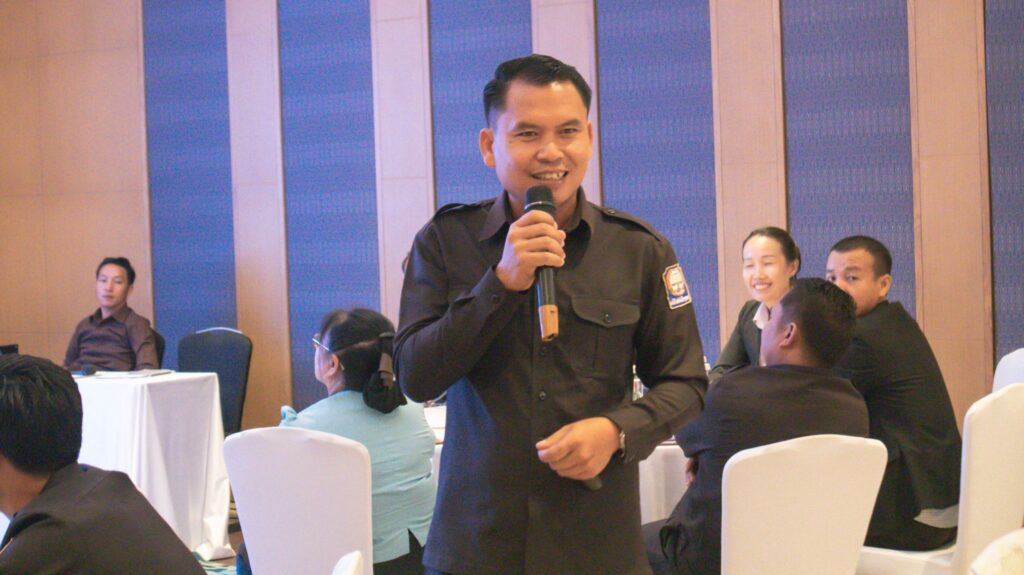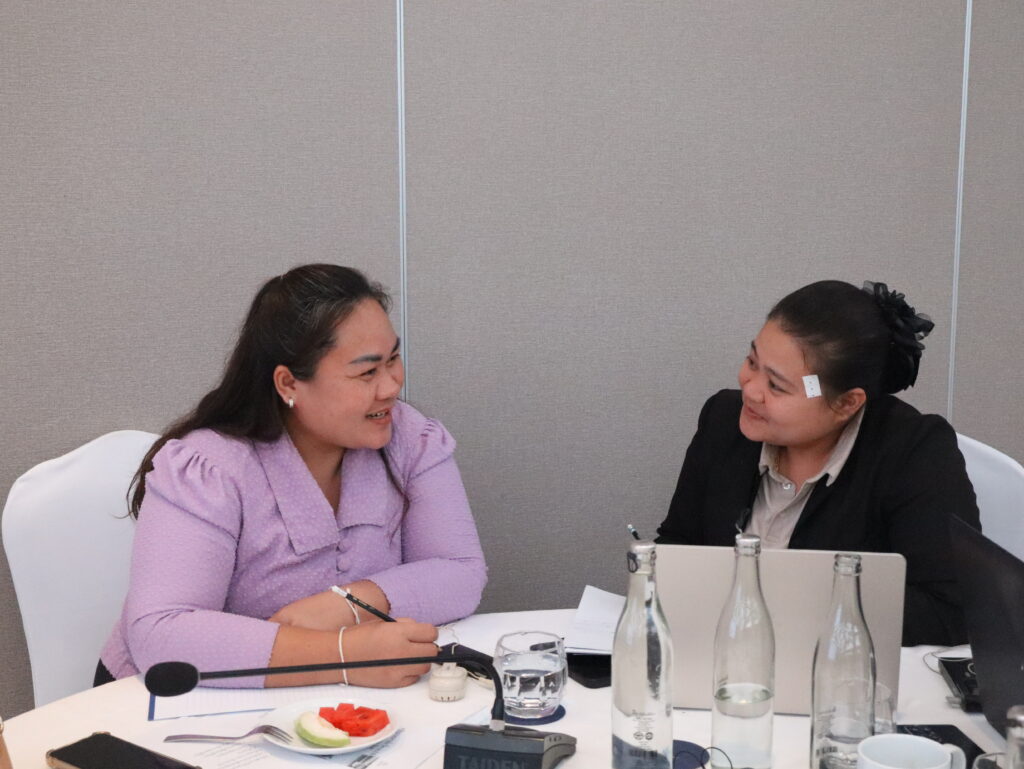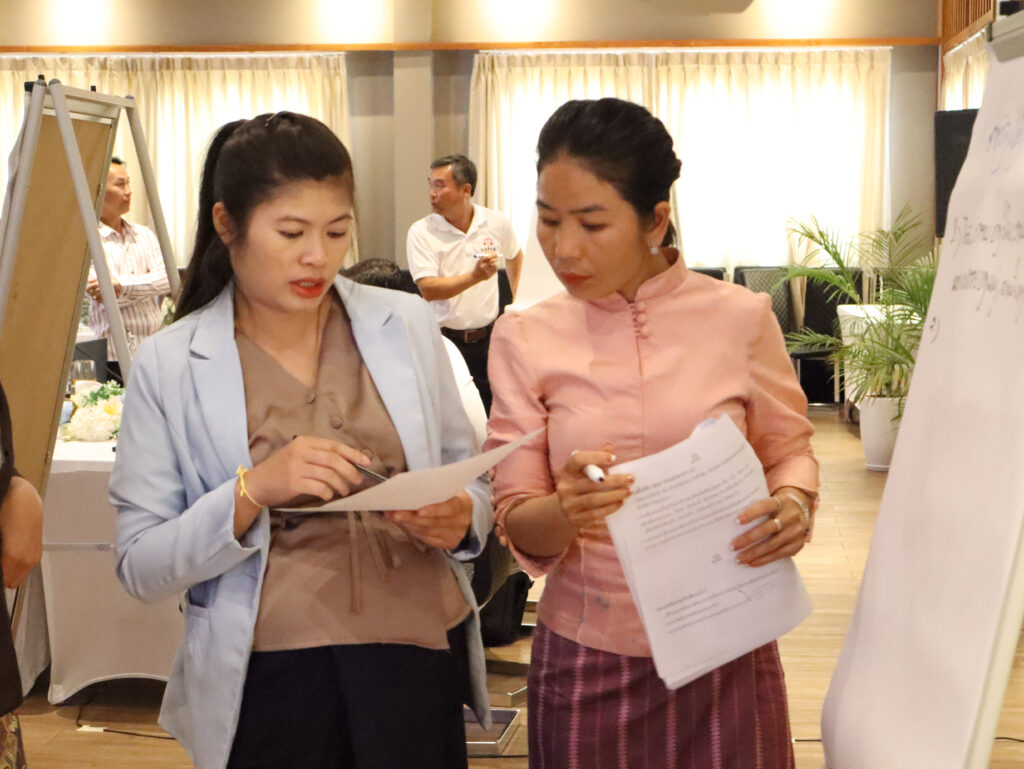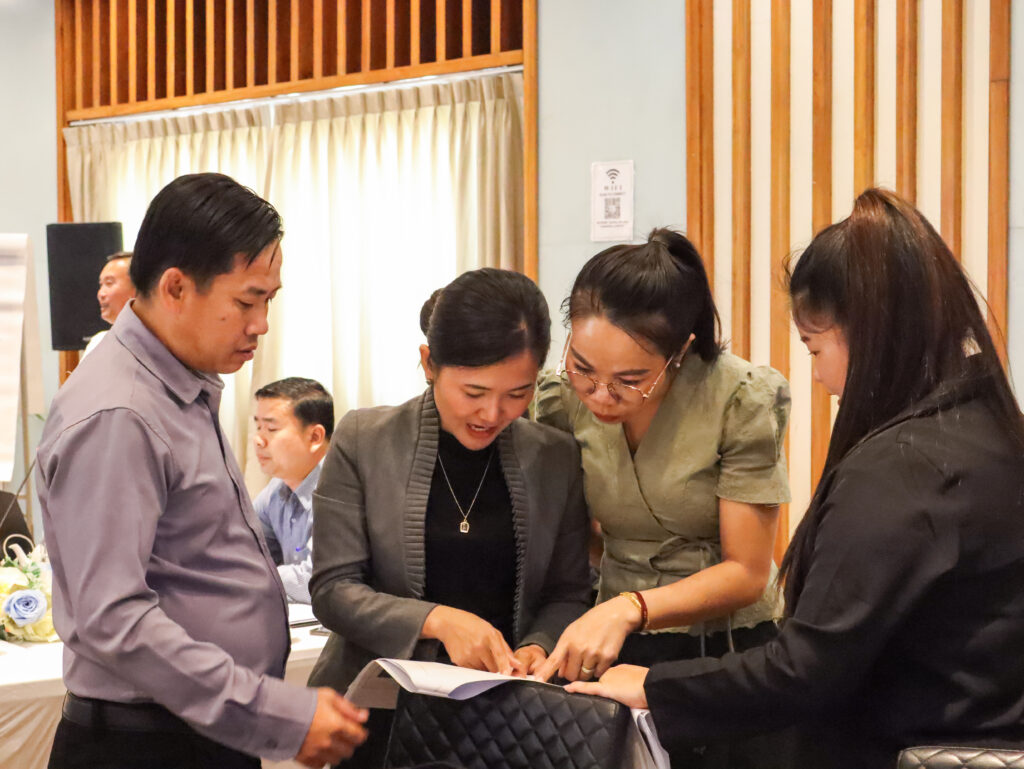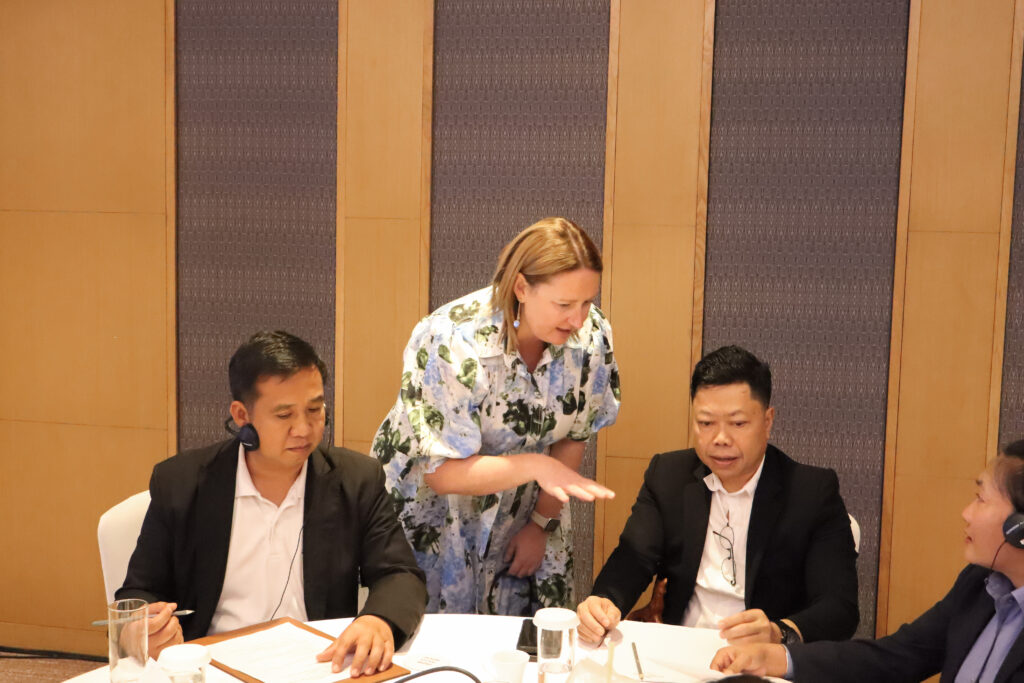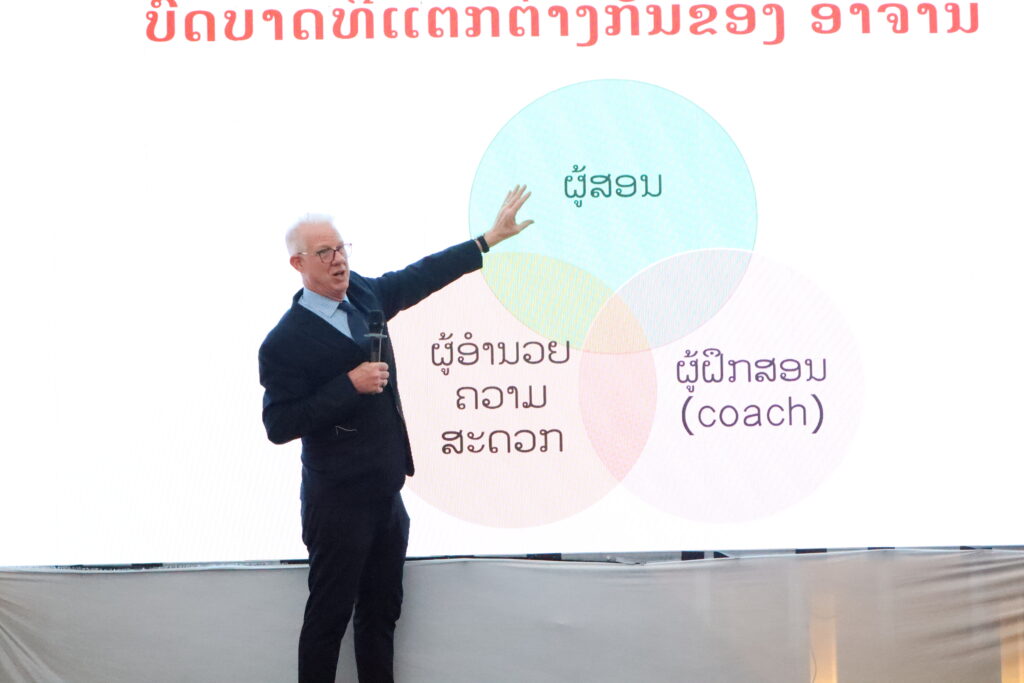
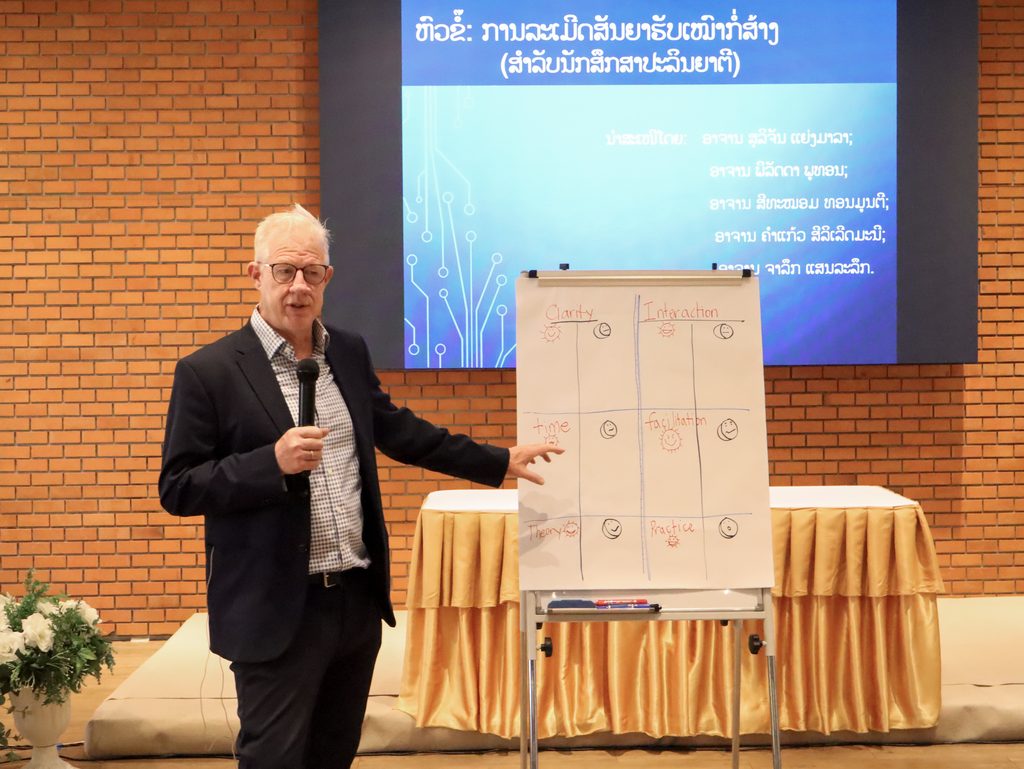
From 26-28 May 2026, the JuSTICE Project, funded by the Agence Française de Développement (AFD), supported the National Institute of Justice (NIJ) in organising a three-day Pilot Training on Problem-Based Learning (PBL) and Legal Reasoning in Luang Prabang, led by international legal education experts Dr Hajer Rouidi and Dr Lawrence Siry.
The NIJ plays a central role in professional legal education in Lao PDR through its one-year judicial training programme, which prepares future legal and judicial professionals and brings together the different professions of the justice sector. Its training programme draws on national trainers from several institutions, including the People’s Supreme Court (PSC), the Office of the Supreme People’s Prosecutor (OSPP), and the Lao Bar Association (LBA).
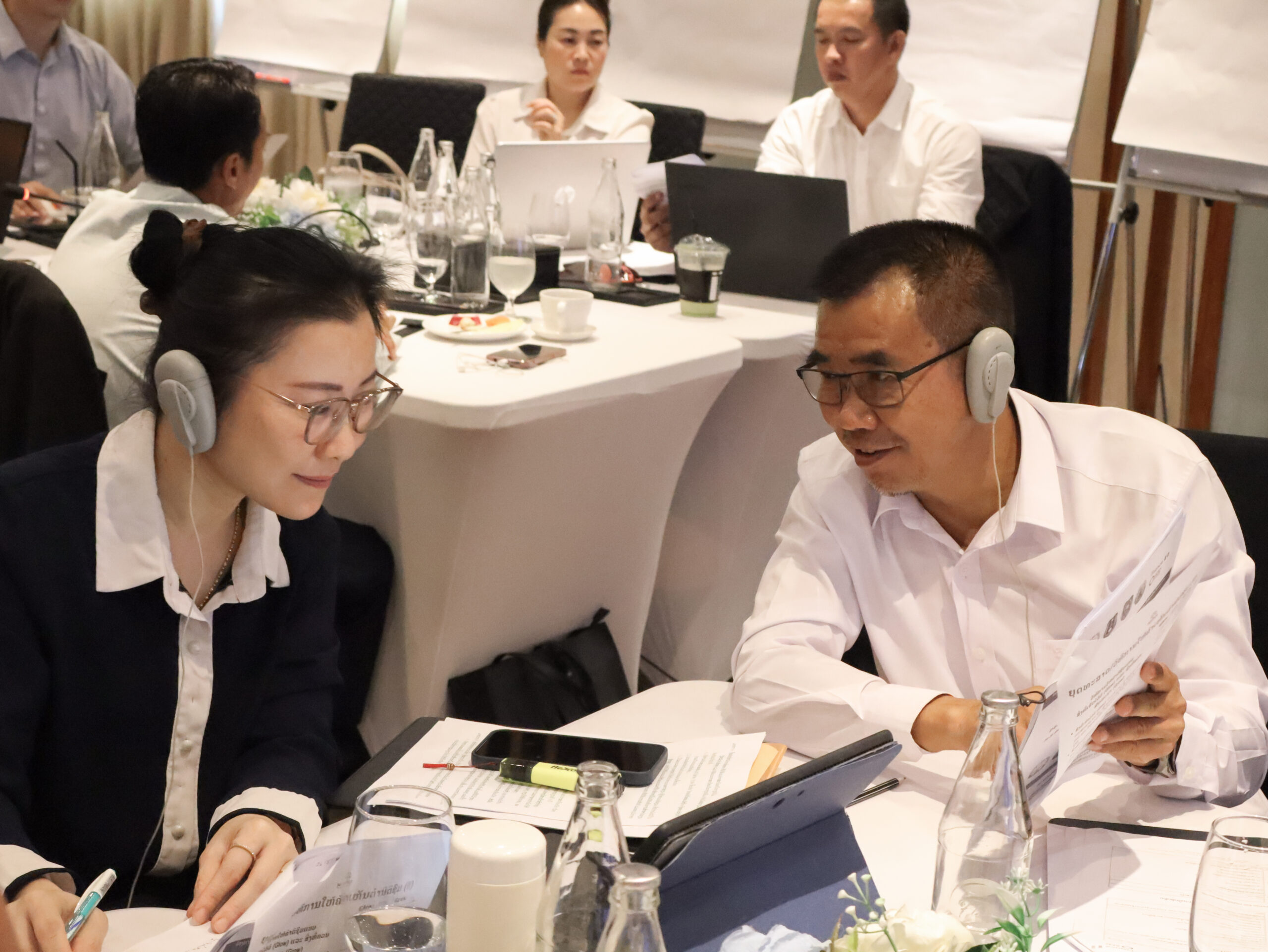
The pilot therefore brought together 15 national trainers from the NIJ, PSC, OSPP and LBA, with a dual objective: to strengthen the quality and consistency of teaching within the NIJ’s one-year programme, while also developing pedagogical skills that participants can apply within the training programmes of their respective institutions.
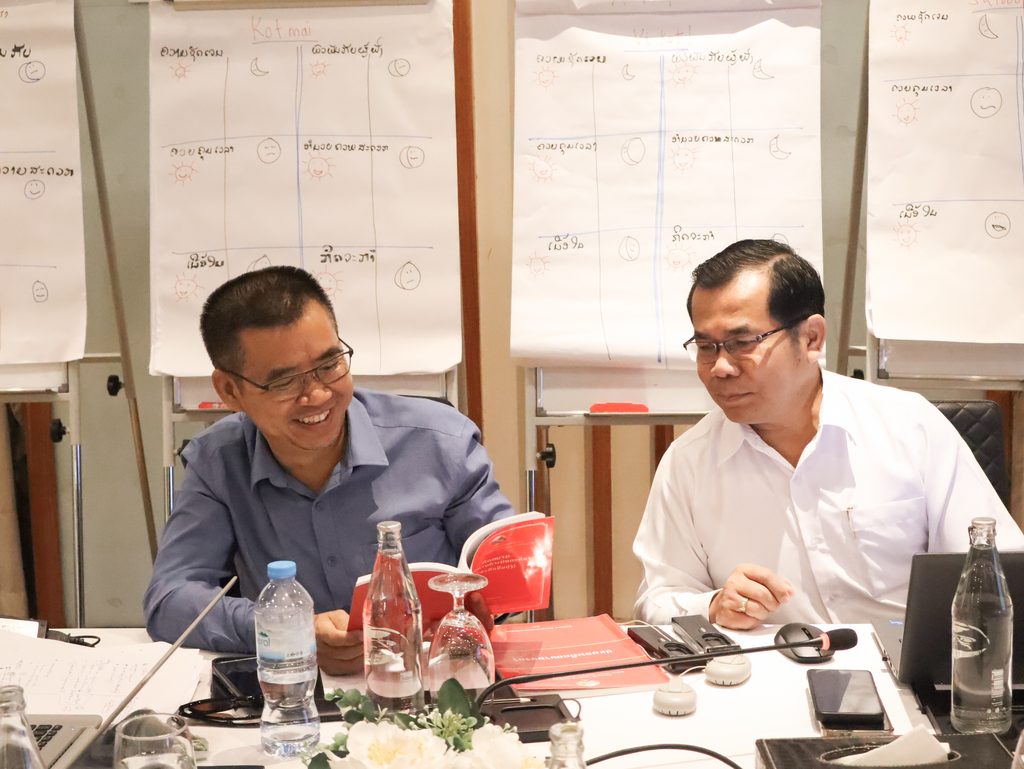
The programme was the practical follow-up to a Training of Trainers organised in January 2026, during which participants explored adult learning principles, Problem-Based Learning, structured legal reasoning through the IRAC method, facilitation techniques, technology tools and effective feedback.
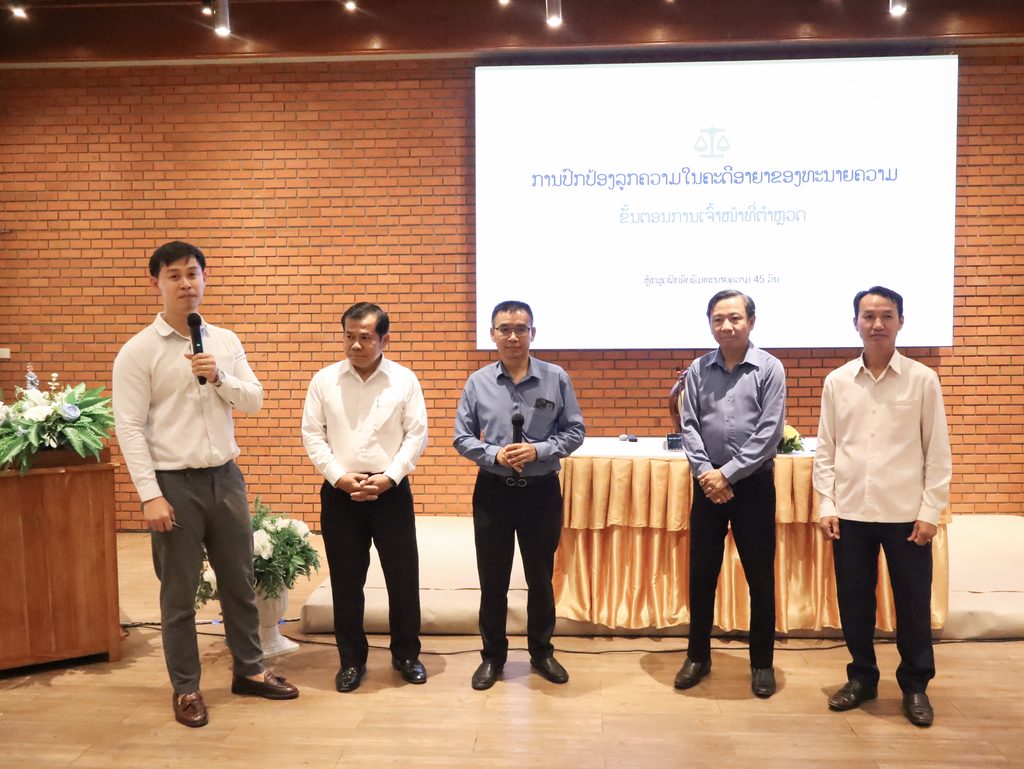
This second phase focused on putting those methods into practice. Working in subject-based groups, participants developed learning objectives and practical activities, prepared PBL and IRAC-based exercises, and designed and delivered their own training simulations. Each simulation was followed by structured self-reflection, peer feedback and individual guidance from the experts.
Through this practical process, trainers tested how legal knowledge can be taught in a more interactive, learner-centred and practice-oriented way, while adapting these approaches to their own areas of legal specialisation and to the realities of legal and judicial training in Lao PDR.
The programme also builds on the JuSTICE Project’s broader work to strengthen legal teaching methodologies and resources, including the development by Dr Rouidi and Dr Siry of a Handbook on Legal Reasoning and IRAC, bringing together practical tools, templates and case studies to support trainers in applying structured legal reasoning and problem-based approaches in their classrooms.
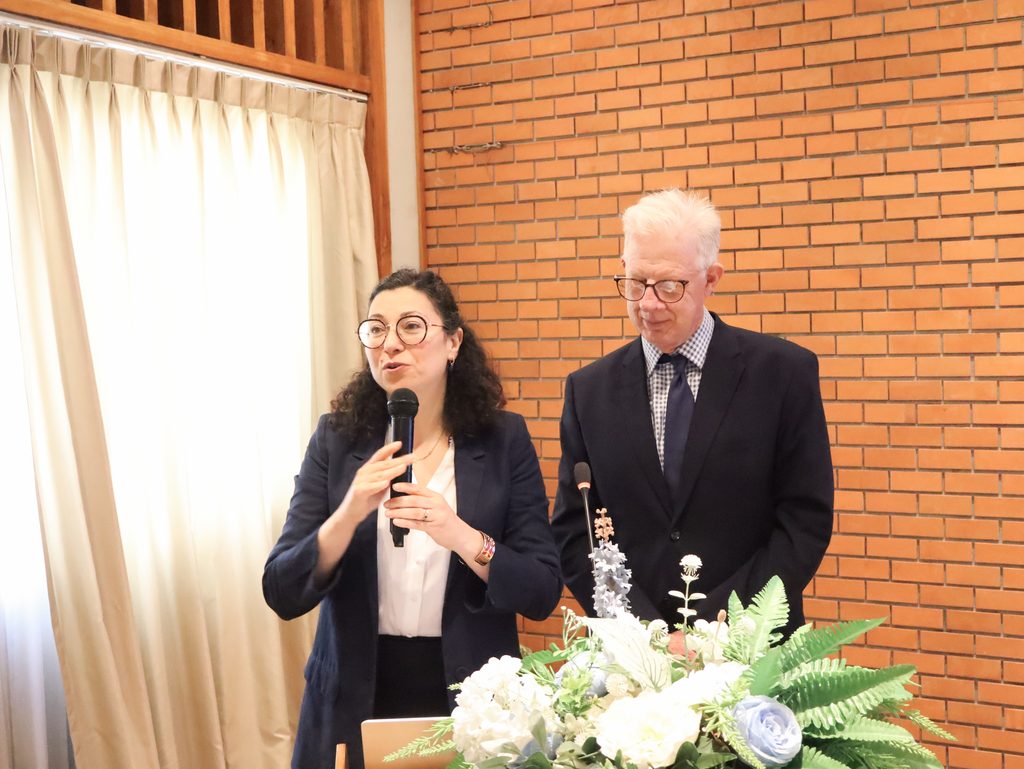
By reinforcing a shared pool of national trainers who contribute to the NIJ’s one-year judicial training programme while also teaching within their own institutions, the initiative creates an important multiplier effect: supporting the NIJ in delivering high-quality professional training while encouraging more consistent, practical and learner-centred approaches across the PSC, OSPP and LBA training centres.
This contributes to the JuSTICE Project’s broader objective of supporting sustainable national capacity for high-quality legal and judicial education in Lao PDR.